
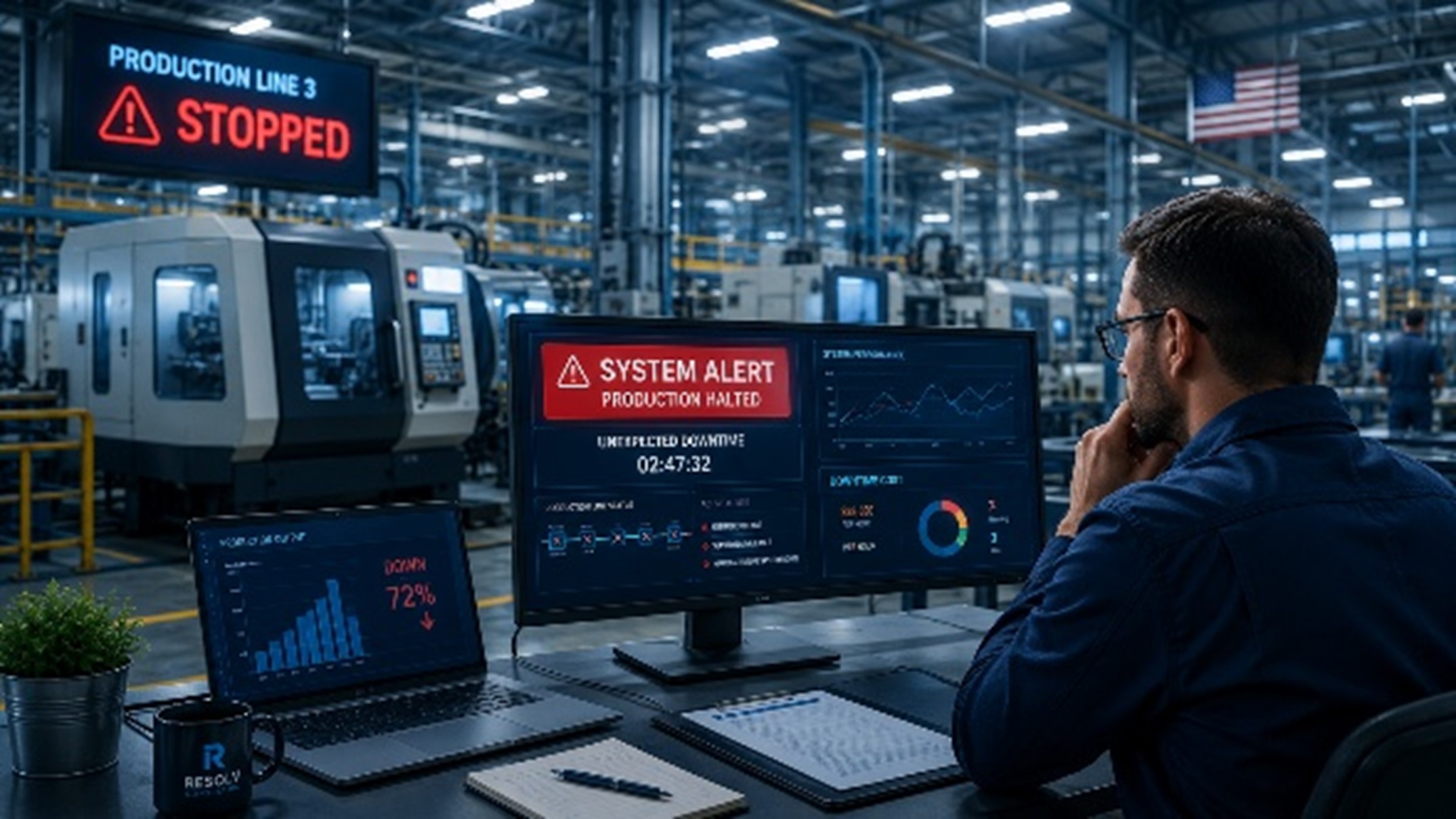
For manufacturers across Southern California, downtime isn’t just an inconvenience—it’s one of the most expensive business disruptions you can experience.
When production stops unexpectedly, the impact extends far beyond the factory floor. Missed deadlines, delayed shipments, idle employees, dissatisfied customers, and mounting recovery costs can quickly turn a short IT outage into a significant financial setback.
Whether the cause is a hardware failure, cybersecurity incident, software issue, or network outage, every minute of downtime has a measurable cost.
Understanding these costs is the first step toward reducing them.
Why Manufacturing Downtime Is Different
Manufacturing environments rely on interconnected systems that support nearly every aspect of production, including ERP systems, production scheduling software, inventory management platforms, CNC machines, industrial control systems, warehouse management systems, Microsoft 365, and network infrastructure.
When one critical system becomes unavailable, production can slow—or stop completely.
Unlike many office environments, downtime in manufacturing often creates a ripple effect across operations, purchasing, shipping, customer service, and accounting.
The Direct Costs of Downtime
The financial impact begins immediately.
Common direct costs include:
- Lost production output
- Employee idle time
- Missed customer deadlines
- Expedited freight costs
- Overtime expenses
- Emergency IT support
- Equipment sitting idle
For many manufacturers, these losses accumulate far faster than expected.
The Hidden Costs Most Manufacturers Overlook
Some of the most significant costs aren’t immediately visible.
These include:
- Damaged customer relationships
- Lost future business opportunities
- Reduced employee productivity
- Increased management stress
- Supply chain disruptions
- Reputation damage
Even after systems are restored, these indirect costs can continue affecting the business.
Cybersecurity Is Now One of the Biggest Causes of Downtime
Cyberattacks have become one of the leading causes of unexpected manufacturing downtime.
Ransomware, phishing attacks, compromised credentials, and other security incidents can halt operations within minutes.
Manufacturers have become increasingly attractive targets because attackers understand that production interruptions create urgency. A single successful cyberattack can stop production lines, delay customer shipments, and require days or even weeks of recovery.
Strong cybersecurity practices not only protect sensitive data but also help maintain business continuity.
How Much Could One Day of Downtime Cost?
The exact cost varies depending on the size of the organization and the nature of its operations.
Potential expenses include:
- Lost production revenue
- Payroll during idle time
- Missed contractual obligations
- Emergency consulting costs
- Recovery expenses
- Customer penalties
For many manufacturers, even a single day of downtime can represent tens of thousands of dollars—or more.
How Manufacturers Reduce Downtime
While no organization can eliminate every risk, proactive planning significantly reduces both the likelihood and impact of disruptions.
Best practices include:
- Proactive IT monitoring
- Regular hardware maintenance
- Cybersecurity awareness training
- Multi-factor authentication
- Secure backups
- Disaster recovery planning
- Network redundancy
- Routine software updates
Organizations that invest in prevention often recover more quickly when unexpected events occur.
Five Questions Every Manufacturer Should Ask
- How long could our business operate if our ERP system went offline?
- When was the last time we tested our backups?
- Are our critical systems monitored 24/7?
- Could our employees recognize a phishing attack?
- Do we have a documented disaster recovery plan?
If any of these questions are difficult to answer, now is the time to evaluate your current IT strategy.
Final Thoughts
Manufacturing downtime isn’t simply an IT issue—it’s a business issue.
For manufacturers throughout the Inland Empire and Greater Los Angeles, proactive technology management plays a critical role in maintaining productivity, protecting customer relationships, and supporting long-term growth.
Reducing downtime starts with understanding where your risks exist and implementing practical strategies that strengthen both cybersecurity and operational resilience.
At Resolv Consulting, we help manufacturers throughout Southern California build secure, reliable IT environments that minimize downtime and support long-term operational success. Whether you need co-managed IT support, cybersecurity services, or disaster recovery planning, our team understands the technology challenges manufacturers face every day.
Frequently Asked Questions
What causes the most manufacturing downtime?
Common causes include hardware failures, software issues, cybersecurity incidents, network outages, human error, and power disruptions.
How can manufacturers reduce downtime?
Proactive IT monitoring, preventive maintenance, cybersecurity improvements, regular backups, and disaster recovery planning all help reduce downtime.
Why are manufacturers targeted by cybercriminals?
Manufacturers rely heavily on continuous operations, making them attractive targets for ransomware and other cyberattacks that can quickly disrupt production.
Is downtime only caused by cyberattacks?
No. While cybersecurity incidents are increasingly common, hardware failures, aging infrastructure, software problems, and human error remain significant causes of downtime.