
For today’s manufacturers, cybersecurity is no longer just an IT concern—it’s a business continuity issue.
A successful cyberattack can bring production to a halt, lock employees out of critical systems, disrupt supply chains, and damage customer trust. While strong cybersecurity defenses reduce risk, no organization is immune to evolving threats.
The difference between a minor disruption and a major operational crisis often comes down to one thing:
Having a well-defined Cybersecurity Incident Response Plan.
For manufacturers throughout Southern California, being prepared before an attack occurs can significantly reduce downtime, financial losses, and recovery time.
What Is a Cybersecurity Incident Response Plan?
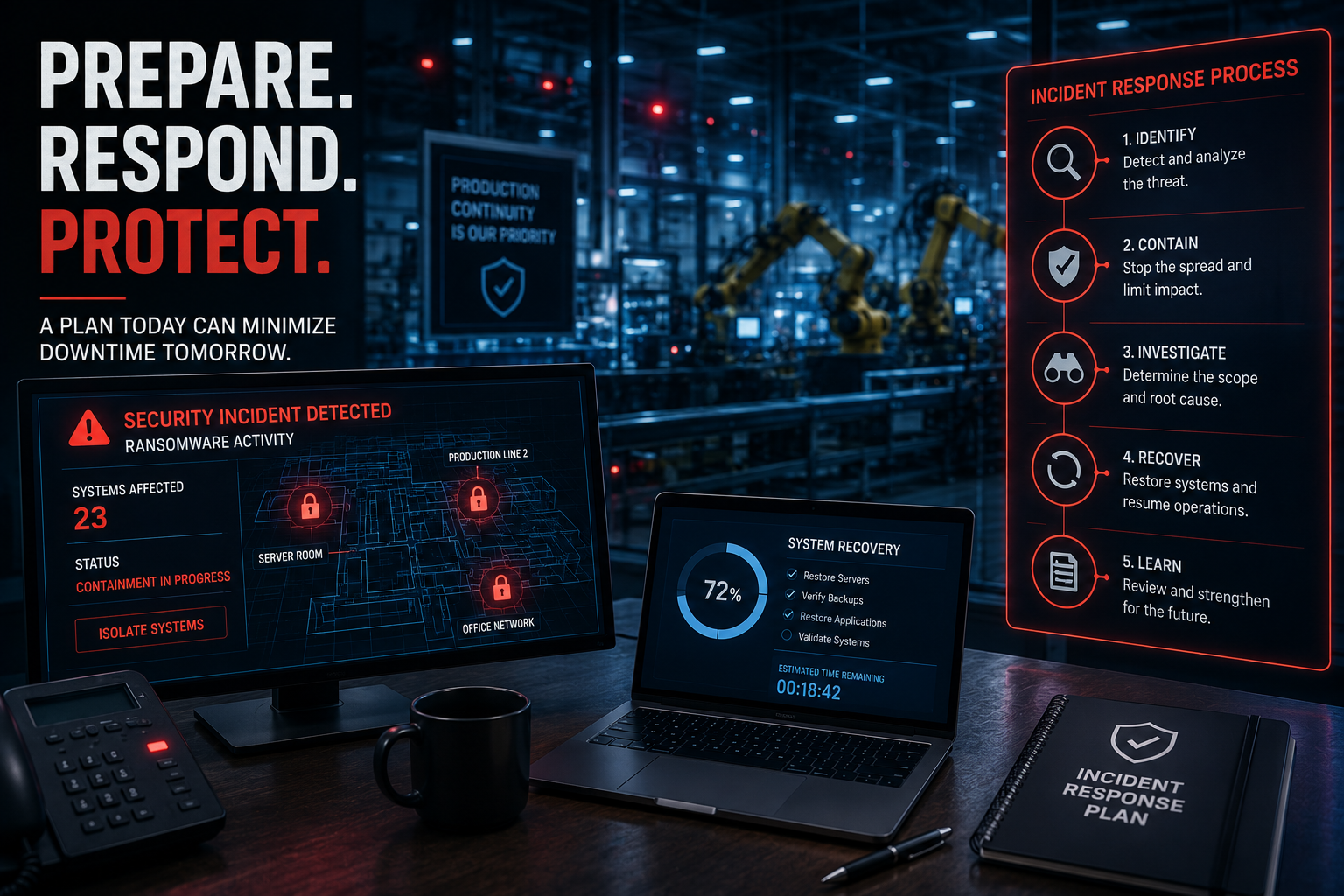
An Incident Response Plan is a documented process that outlines how your organization will identify, contain, investigate, recover from, and learn from a cybersecurity incident.
Rather than making critical decisions during a crisis, your team follows a structured plan that minimizes confusion and accelerates recovery.
An effective response plan protects both your technology environment and your business operations.
Why Manufacturers Are Frequent Targets
Manufacturing has become one of the most targeted industries for cybercriminals.
Modern facilities rely on interconnected technologies such as:
- ERP systems
- Production equipment
- Warehouse management systems
- Vendor portals
- Cloud applications
- Remote access tools
Disrupting any of these systems can quickly impact production schedules, customer deliveries, and revenue.
Attackers know that manufacturers often face pressure to restore operations quickly, making them attractive targets for ransomware and other cyber threats.
What Every Incident Response Plan Should Include
A strong Incident Response Plan should clearly define how your organization will respond before, during, and after a cyberattack.
Key components include:
Defined Response Team
Identify who is responsible for decision-making, technical response, communications, and executive oversight during an incident.
Incident Identification
Establish procedures for detecting suspicious activity, verifying threats, and determining the severity of an incident.
Containment Procedures
Outline immediate actions to isolate affected systems, prevent the spread of malware, and protect critical business operations.
Recovery Process
Document how systems will be restored using verified backups while ensuring business operations resume safely.
Communication Plan
Determine how employees, customers, vendors, insurance providers, and regulatory agencies will be informed when appropriate.
Preparation Is Just as Important as Response
An Incident Response Plan should never sit untouched in a binder.
Manufacturers should regularly:
- Test backup systems
- Conduct tabletop exercises
- Review employee responsibilities
- Update emergency contacts
- Validate recovery procedures
- Review cybersecurity policies
Regular testing helps identify weaknesses before an actual incident occurs.
Common Mistakes Manufacturers Make
Many organizations invest heavily in cybersecurity technology but overlook incident planning.
Some common mistakes include:
- No written response plan
- Unclear employee responsibilities
- Untested backups
- Poor communication procedures
- Delayed decision-making
- Lack of cybersecurity training
These issues often increase downtime and make recovery significantly more difficult.
How Managed IT Strengthens Incident Response
Partnering with an experienced Managed Service Provider gives manufacturers access to additional cybersecurity expertise before and during an incident.
A Managed IT partner can help:
- Monitor systems 24/7
- Detect threats earlier
- Coordinate incident response
- Restore systems faster
- Strengthen backup strategies
- Improve cybersecurity readiness
Having experienced professionals available during a crisis can dramatically improve recovery outcomes.
Final Thoughts
Cyberattacks are no longer a matter of if—they’re a matter of when.
Manufacturers that prepare in advance are far better positioned to minimize downtime, protect sensitive information, and maintain customer confidence when an incident occurs.
At Resolv Consulting, we help manufacturers throughout the Inland Empire and Greater Los Angeles develop proactive cybersecurity strategies, strengthen incident response capabilities, and improve overall business resilience. Preparing today can make all the difference tomorrow.
Frequently Asked Questions
What is a cybersecurity incident response plan?
A cybersecurity incident response plan is a documented set of procedures that helps an organization identify, contain, recover from, and learn from cybersecurity incidents.
Why do manufacturers need an incident response plan?
Manufacturers depend on technology to support production, inventory, logistics, and customer commitments. An incident response plan helps reduce downtime and speeds recovery when cyber incidents occur.
How often should an incident response plan be reviewed?
Organizations should review and test their incident response plan at least annually or whenever significant technology or business changes occur.
Can a Managed Service Provider help develop an incident response plan?
Yes. An experienced MSP can assist with incident planning, cybersecurity monitoring, backup strategies, employee training, and ongoing preparedness to help manufacturers respond effectively to cyber threats.