
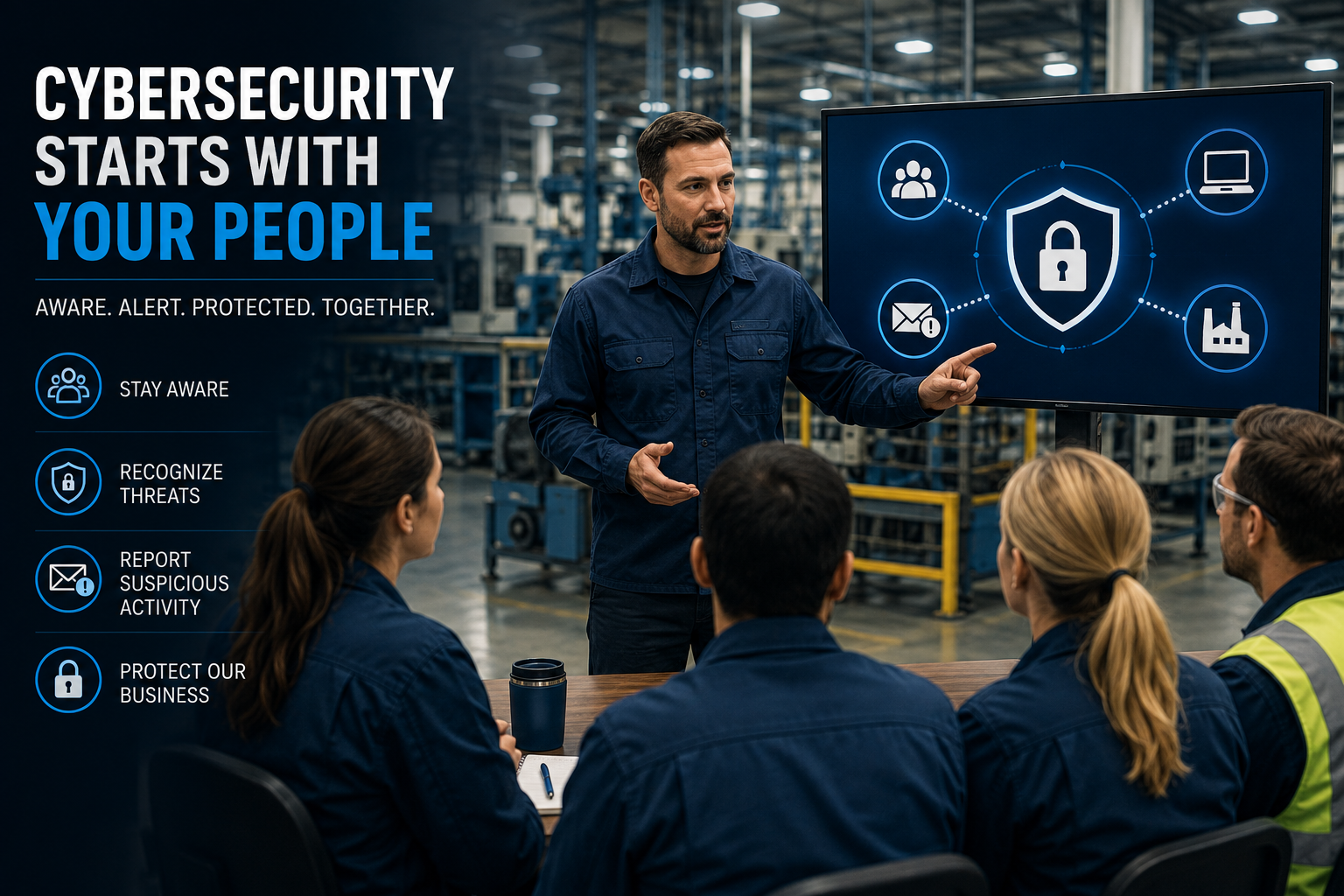
When manufacturers think about cybersecurity, they often focus on technology—firewalls, antivirus software, multi-factor authentication, and network monitoring.
While these tools are essential, they only tell part of the story.
One of the most effective ways to reduce cyber risk is by creating a workplace where every employee understands their role in protecting the business.
Cybersecurity is no longer just the responsibility of the IT department. It is a shared responsibility that begins with awareness, accountability, and consistent security practices.
For manufacturers throughout Southern California, building a cybersecurity culture is one of the smartest long-term investments you can make.
Why Employees Matter
Many successful cyberattacks begin with a simple mistake.
An employee clicks a phishing email.
A weak password is reused.
Sensitive information is shared with the wrong person.
A suspicious login request is ignored.
These actions may seem small, but they can create opportunities for attackers to gain access to critical business systems.
When employees know how to recognize threats and respond appropriately, they become one of your strongest security defenses.
Common Human Risks
Manufacturing organizations frequently encounter cybersecurity risks caused by:
- Phishing emails
- Weak or reused passwords
- Unauthorized USB devices
- Unsecured mobile devices
- Social engineering attacks
- Accidental data sharing
- Poor remote access habits
Reducing these risks begins with education—not blame.
What a Strong Cybersecurity Culture Looks Like
Organizations with strong cybersecurity cultures share several characteristics.
Employees:
- Report suspicious emails immediately.
- Use multi-factor authentication consistently.
- Follow password best practices.
- Lock devices when unattended.
- Understand company security policies.
- Ask questions when something seems unusual.
- Recognize that cybersecurity supports business success.
Instead of viewing security as an obstacle, employees understand how it protects customers, production, and the company’s reputation.
Leadership Sets the Example
Cybersecurity culture starts at the top.
When leadership follows security policies, participates in training, and openly supports cybersecurity initiatives, employees are more likely to take security seriously.
Leaders should communicate that cybersecurity is:
- A business priority
- Everyone’s responsibility
- Part of protecting customers
- Essential to operational continuity
Strong leadership helps turn cybersecurity into part of everyday business operations.
Training Should Be Ongoing
Annual security training is no longer enough.
The threat landscape changes constantly, and employees need regular opportunities to stay informed.
Effective training programs include:
- Phishing simulations
- Security awareness sessions
- Password management education
- Remote work security
- Mobile device security
- Data protection best practices
- Incident reporting procedures
Short, consistent training sessions often produce better long-term results than one lengthy annual presentation.
Reinforce Good Security Habits
Building a cybersecurity culture isn’t about catching employees making mistakes.
It’s about reinforcing positive behaviors.
Manufacturers can encourage security by:
- Recognizing employees who report suspicious activity
- Sharing cybersecurity tips during team meetings
- Providing easy ways to report concerns
- Reviewing lessons learned after security incidents
- Celebrating improvements in security awareness
Positive reinforcement creates long-term engagement.
How Managed IT Supports Security Awareness
An experienced Managed Service Provider can help manufacturers strengthen cybersecurity beyond technology alone.
A Managed IT partner can assist with:
- Security awareness training
- Phishing simulations
- Policy development
- Compliance support
- Security assessments
- Employee education
- Ongoing cybersecurity guidance
Combining technical security with employee education creates a stronger defense against evolving cyber threats.
Final Thoughts
Cybersecurity is strongest when every employee understands their role in protecting the organization.
Manufacturers that invest in security awareness reduce risk, improve compliance, and strengthen business resilience while creating a culture where cybersecurity becomes part of everyday operations.
At Resolv Consulting, we help manufacturers throughout the Inland Empire and Greater Los Angeles build comprehensive cybersecurity programs that combine advanced technology, employee education, and proactive IT strategies to protect what matters most.
Frequently Asked Questions
Why is cybersecurity culture important?
Most cyberattacks involve some form of human interaction. A strong cybersecurity culture helps employees recognize threats, avoid common mistakes, and respond quickly to suspicious activity.
How often should cybersecurity training occur?
Security awareness should be continuous. Most organizations benefit from regular training sessions, phishing simulations, and periodic policy reviews throughout the year.
Can cybersecurity awareness reduce ransomware risk?
Yes. Educated employees are more likely to recognize phishing emails and suspicious activity, helping prevent many ransomware attacks before they begin.
Can a Managed Service Provider provide employee cybersecurity training?
Yes. Many Managed Service Providers offer security awareness programs, phishing simulations, policy guidance, and ongoing education to help organizations strengthen their overall cybersecurity posture.
This blog is part of Resolv Consulting’s Manufacturing Cybersecurity Series, helping Southern California manufacturers strengthen cybersecurity from the inside out by creating security-conscious teams, reducing human risk, and building resilient business operations.