
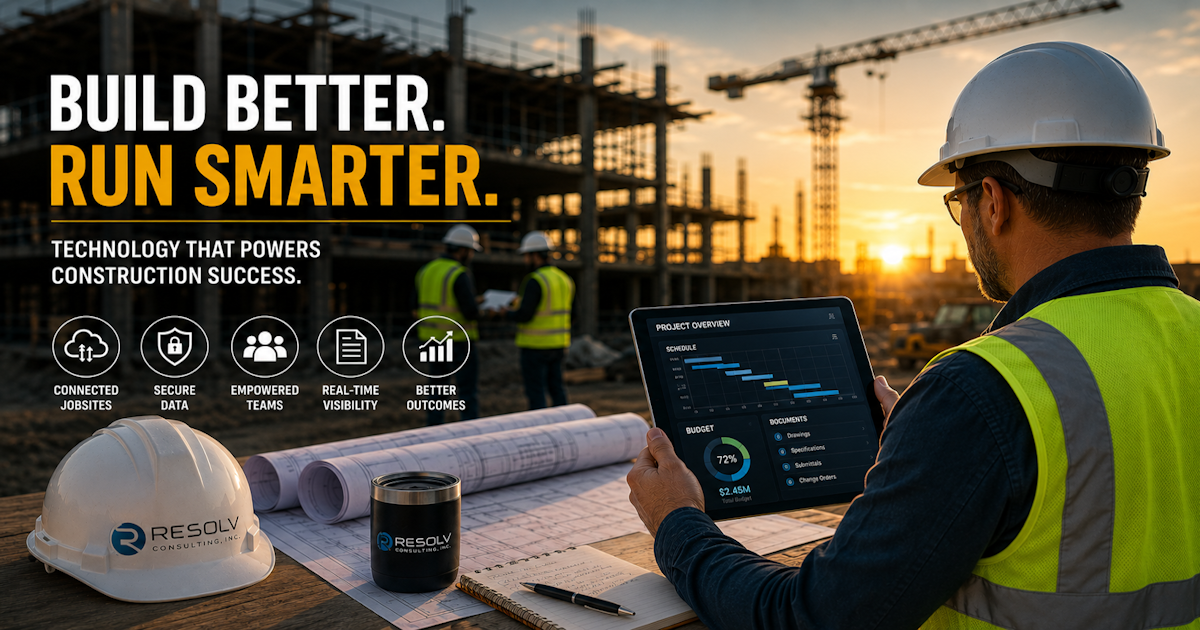
Construction has become increasingly dependent on technology.
From project management and estimating to communication, accounting, cybersecurity, and field operations, today’s general contractors rely on technology throughout nearly every stage of a project.
When these systems work together, they can improve productivity, communication, and project visibility.
When they don’t, even a relatively small technology problem can create delays that affect an entire project.
Whether you’re managing one project or multiple jobsites across Southern California, having the right technology foundation is essential.
Here are 10 technology systems every general contractor should consider.
- Reliable Business Internet
Reliable internet is the foundation of a modern construction operation.
Office teams need dependable connectivity for cloud applications, communication, file sharing, and project management.
Jobsites may also require connectivity for tablets, mobile devices, cameras, access systems, and other connected equipment.
A reliable network helps keep both office and field teams connected.
- Microsoft 365
Microsoft 365 provides construction companies with a powerful collection of communication and collaboration tools.
Applications such as:
- Outlook
- Microsoft Teams
- OneDrive
- SharePoint
- Word
- Excel
can help teams communicate, share information, manage documents, and collaborate from virtually anywhere.
For companies with employees working between offices and jobsites, having a centralized cloud environment can significantly simplify collaboration.
- Construction Project Management Software
Construction companies depend on accurate project information.
Platforms such as Procore and other construction management systems can help teams manage:
- Project documents
- Scheduling
- RFIs
- Submittals
- Change orders
- Communication
- Project information
The technology itself is only part of the equation, however.
Proper user permissions, account security, backups, and employee training are equally important.
- Digital Plan and Document Management
Construction projects generate enormous amounts of documentation.
Architectural plans, engineering documents, specifications, contracts, and revisions all need to be accessible to the right people.
Tools such as Bluebeam can help construction teams work with digital drawings and documents more efficiently.
A well-organized document management strategy also reduces the risk of employees working from outdated information.
- Cybersecurity Protection
Every connected device creates another potential entry point for cybercriminals.
Construction companies should have layered cybersecurity protections that include:
- Multi-Factor Authentication
- Endpoint protection
- Email security
- Network monitoring
- Security awareness training
- Secure password policies
Cybersecurity should protect both office employees and employees working remotely from jobsites.
- Secure Backup and Disaster Recovery
Construction companies cannot afford to lose critical project information.
A reliable backup strategy should protect important business and project data from:
- Ransomware
- Hardware failure
- Accidental deletion
- Software problems
- Natural disasters
- Other unexpected events
Backups should also be tested regularly to ensure information can actually be recovered when needed.
- Mobile Device Management
Superintendents, project managers, estimators, and executives increasingly rely on laptops, smartphones, and tablets.
Mobile Device Management can help organizations:
- Secure company devices
- Enforce security policies
- Manage applications
- Protect company data
- Remotely lock or wipe lost devices
This becomes especially important when employees regularly move between offices, jobsites, and client locations.
- Reliable Jobsite Wi-Fi and Networking
Construction teams increasingly rely on technology at the jobsite.
Poor connectivity can make it difficult to access drawings, communicate with the office, update project information, or use cloud applications.
A properly designed jobsite network can help provide reliable connectivity while maintaining appropriate security controls.
- IT Monitoring and Support
Technology problems don’t always happen at convenient times.
Proactive monitoring can identify potential issues before they become major disruptions.
Managed IT support can help construction companies with:
- Help desk support
- Network monitoring
- Hardware management
- Software updates
- Cybersecurity
- Microsoft 365 administration
- Troubleshooting
The goal isn’t simply to fix technology after it breaks.
It’s to identify problems before they have an opportunity to affect the project.
- Business Continuity Planning
Technology failures, cyberattacks, natural disasters, and other unexpected events can interrupt construction operations.
A business continuity strategy helps answer critical questions before an emergency occurs:
What happens if our systems go down?
How quickly can we recover?
Who is responsible for responding?
How will our field teams continue working?
Having a documented plan can significantly reduce confusion and downtime during an unexpected disruption.
Putting It All Together
Having individual technology tools isn’t enough.
The most effective construction technology strategy connects these systems into a secure and manageable environment.
Your project management platform needs secure user accounts.
Your employees need reliable devices and connectivity.
Your files need appropriate access controls and backups.
And your entire environment needs ongoing monitoring and support.
When these pieces work together, technology becomes an asset to the construction operation rather than another source of problems.
How Resolv Consulting Can Help
Construction companies need technology that works in both the office and the field.
Resolv Consulting helps construction companies throughout the Inland Empire and Greater Los Angeles manage, secure, and support the technology behind their operations.
From Managed IT Services and cybersecurity to Microsoft 365, backup and disaster recovery, and ongoing technology support, our goal is to help construction teams stay productive and protected.
Final Thoughts
Construction technology is no longer limited to computers in the office.
Today’s projects depend on connected employees, cloud applications, mobile devices, digital plans, project management platforms, and secure communication.
The right technology strategy can help general contractors improve productivity, protect important information, and keep projects moving.
If your construction company’s technology environment has grown faster than your IT strategy, it may be time to evaluate whether your systems are keeping up with the demands of your business.
Frequently Asked Questions
What technology do general contractors need?
Most general contractors benefit from reliable internet, Microsoft 365, construction project management software, document management, cybersecurity, backup and disaster recovery, mobile device management, jobsite networking, IT monitoring, and business continuity planning.
Why is cybersecurity important for construction companies?
Construction companies manage valuable project information, financial data, employee information, and communications with numerous vendors and subcontractors. Protecting these systems helps reduce the risk of cyberattacks and costly business disruptions.
How does technology improve construction productivity?
Technology can help teams communicate faster, access current project information, collaborate remotely, reduce manual processes, and keep office and field personnel connected.
What is the best IT solution for a construction company?
The right solution depends on the company’s size, number of jobsites, applications, internal IT resources, and operational requirements. A technology assessment can help identify gaps and prioritize improvements.
Should construction companies use Managed IT Services?
Managed IT Services can provide construction companies with proactive monitoring, cybersecurity, help desk support, cloud management, backup, and strategic technology guidance without requiring the company to manage every aspect of its IT environment internally.
This blog is part of Resolv Consulting’s Construction Technology Series, helping general contractors and construction companies throughout Southern California understand how reliable, secure technology can improve productivity, protect project information, and support successful project delivery.